
Table of contents
- What Is a Distributed Attendance System?
- Why Businesses Need Distributed Attendance Systems
- Core Features of a Distributed Attendance System
- Centralized vs Distributed Attendance
- How a Distributed Attendance System Works
- Practical Advantages for Schools, SMEs, and Enterprises
- Why Distributed Attendance Systems Improve Trust
- How DutyPar Excels in Distributed Attendance Systems
A Distributed Attendance System is now a must-have for schools, companies, and field teams that work from many locations. It removes the limits of old, single-device attendance machines and makes tracking simple, fast, and accurate.
What Is a Distributed Attendance System?
A Distributed Attendance System is an attendance setup where data is captured from many devices or locations and then stored and managed through a connected system. Each device can work on its own, but they all sync to a shared platform so managers can see complete, real-time records.
Instead of one machine at one gate, you can have multiple points: phones, tablets, biometric devices, or web apps spread across branches, sites, or classrooms. This makes it ideal for hybrid, remote, and field teams who are never in the same place at the same time.
Why Businesses Need Distributed Attendance Systems
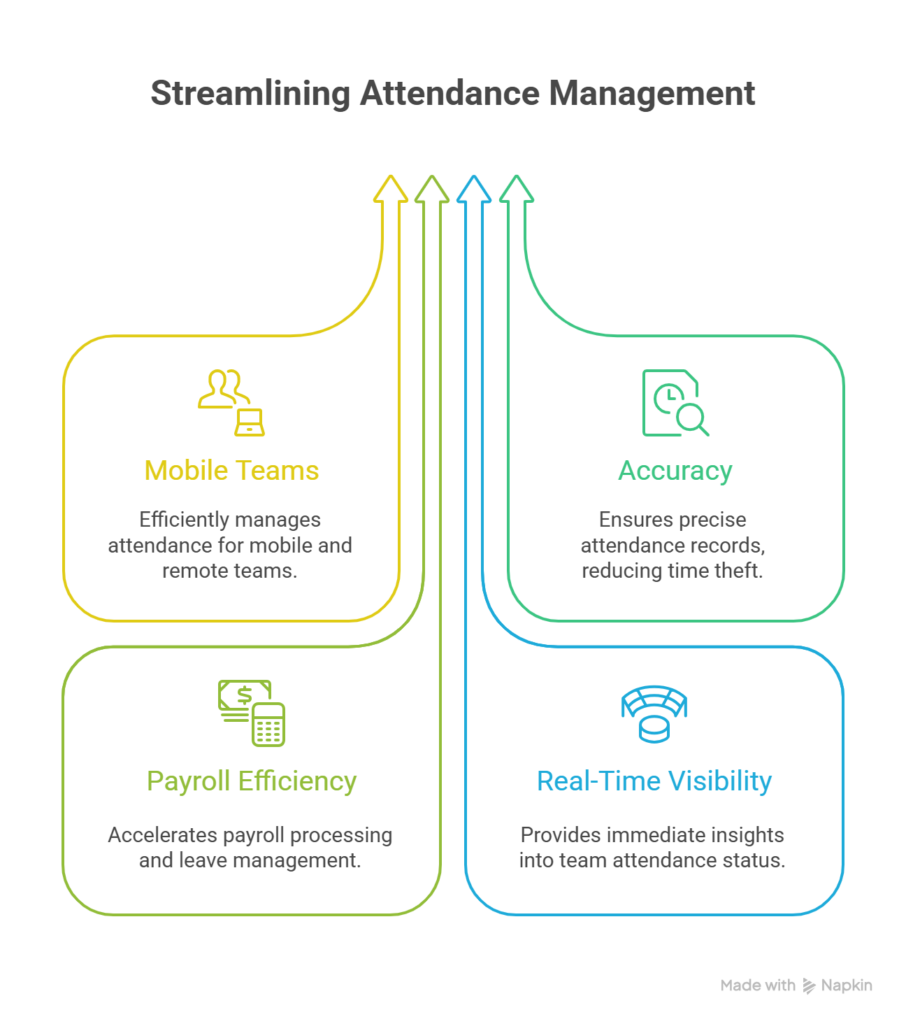
Modern teams are mobile and often distributed across cities, branches, or even countries. A Distributed Attendance System helps you track all of them in a unified way, without messy spreadsheets or manual registers.
Key benefits include:
- Better accuracy and less time theft.
- Faster payroll and leave management.
- Real-time visibility of who is present, late, or absent.
Because data comes from many sources but appears in one dashboard, managers get clear insights and can make quick decisions.
Core Features of a Distributed Attendance System
A powerful Distributed Attendance System often combines biometrics, mobile apps, GPS, and cloud technology. These features make it secure, scalable, and easy to use for both employees and admins.
Important features include:
- Multi-location support: Capture attendance from offices, schools, sites, and remote workers.
- Cloud-based storage: Store data safely in the cloud and access it from anywhere.
- Biometric and facial recognition: Stop proxy or “buddy punching” with secure identity checks.
- GPS and geofencing: Ensure staff mark attendance only from allowed locations.
- Real-time reports: Get instant reports for HR and management needs.
- Integration with payroll: Sync attendance with payroll systems to reduce manual work.
These features turn a Distributed Attendance System into a central tool for workforce management and compliance.
Centralized vs Distributed Attendance
The table below shows how traditional centralized systems differ from Distributed Attendance Systems.
How a Distributed Attendance System Works
The workflow is simple from the user side but smart on the backend.
- Employees or students mark attendance using mobile apps, biometric devices, or web portals.
- Devices capture time, identity, and sometimes location, and send it securely to the cloud.
- The central system cleans, stores, and organizes the data.
- Managers log in to a dashboard to see reports, trends, and alerts.
Even if the internet goes down at a site, a well-designed Distributed Attendance System can store data locally and sync when the connection returns.
Practical Advantages for Schools, SMEs, and Enterprises
A Distributed Attendance System is not just about tech. It solves real daily problems for HR, teachers, and admins.
Some practical advantages are:
- No more paper registers or Excel sheets.
- No long queues at one machine.
- Easy handling of shifts, flexible timings, and remote work.
- Better compliance and audit trails for labor laws and policies.
For schools and colleges, it improves punctuality and reduces manual work for teachers and staff. For businesses, it increases productivity because attendance is transparent and automatic.
Why Distributed Attendance Systems Improve Trust
Trust is a key part of any attendance process. When the system is unfair, slow, or easy to cheat, employees lose faith in data and HR teams.
A Distributed Attendance System builds trust because:
- Biometric or facial recognition ensures that only real, present people can mark attendance.
- GPS and geofencing ensure staff are at the right place at the right time.
- Real-time dashboards make the process transparent for both employees and managers.
This fair and clear system reduces disputes and improves relationships across the organization.
How DutyPar Excels in Distributed Attendance Systems
DutyPar is a strong example of a modern Distributed Attendance System that focuses on ease, security, and flexibility. It supports attendance for schools, SMEs, and field teams through mobile and AI-based technology.
Key ways DutyPar stands out:
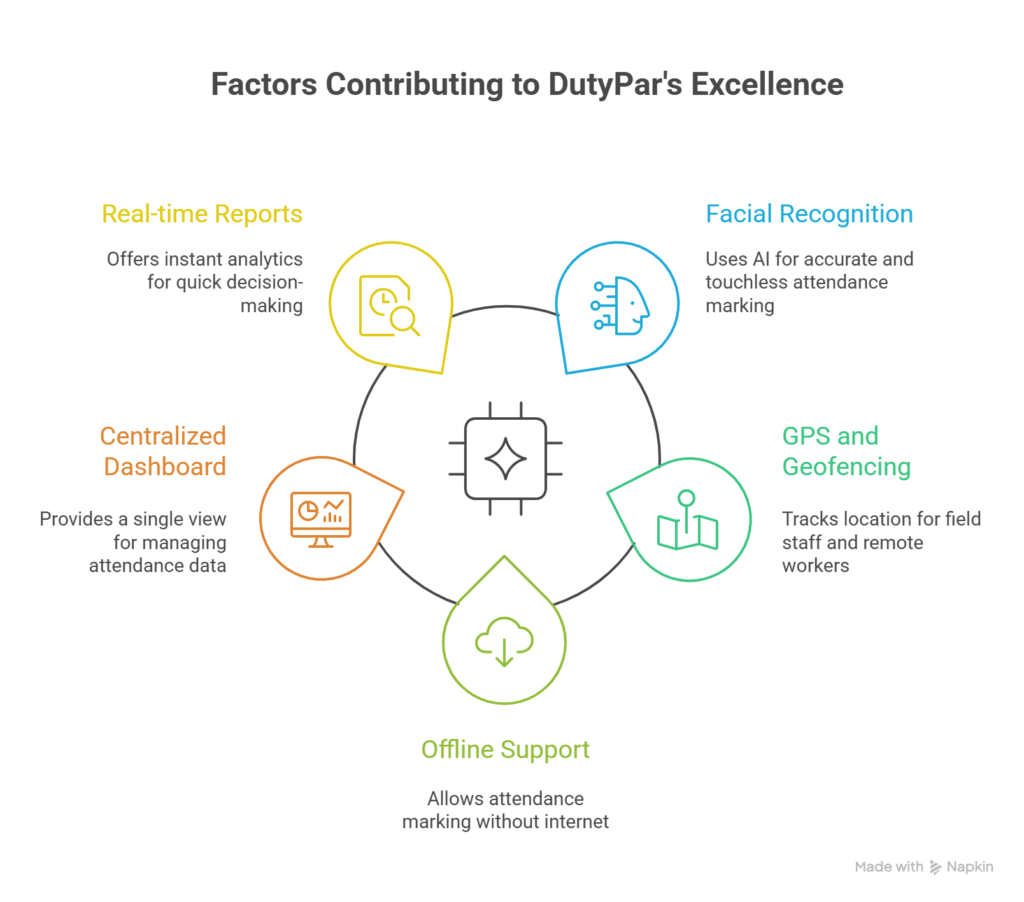
- Facial recognition with AI: DutyPar uses smart facial recognition so users can mark attendance without touch and with high accuracy.
- GPS location and geofencing: It tracks where attendance is marked, making it ideal for field staff, remote workers, and multi-site teams.
- Offline and online support: Users can mark attendance even when the internet is unstable, and the app syncs data when the network returns.
- Centralized dashboard with distributed capture: DutyPar combines a single dashboard with many local devices and phones, blending centralized control with distributed flexibility.
- Real-time reports and insights: It offers instant reports and analytics so managers can make quick decisions and process payroll faster.
Because DutyPar follows a hybrid approach—centralized data view with distributed data capture—it fits well for growing organizations that want both control and scalability.